
Why Attend
The energy sector operates within a complex financial environment characterized by fluctuating commodity prices, changing demand patterns, significant capital investments, regulatory requirements, operational risks and evolving energy policies. Effective accounting, financial forecasting and budgeting are therefore essential for energy organizations seeking to maintain financial sustainability, improve operational efficiency and make informed strategic decisions.
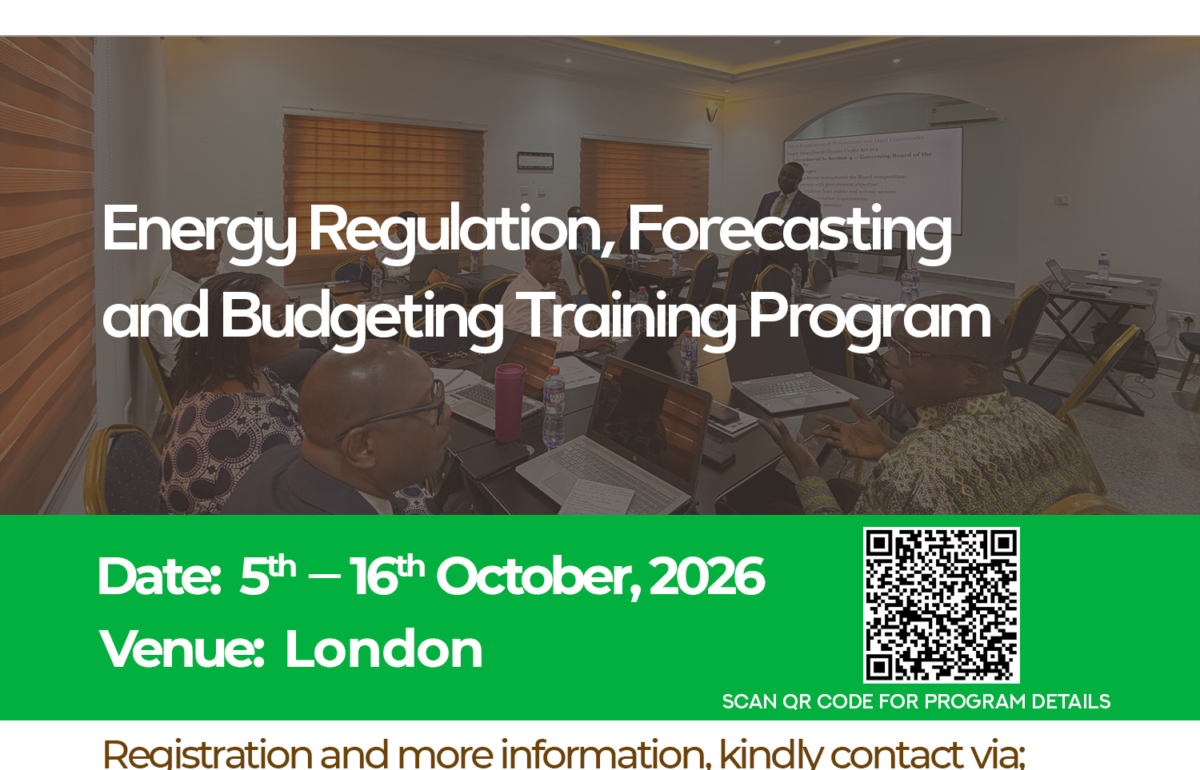
This 10-day Energy Sector Accounting, Forecasting and Budgeting Training Program is designed to provide participants with a comprehensive understanding of the financial management principles and practices applicable to the energy industry.
The program combines energy-sector accounting principles with practical approaches to financial planning, budgeting, forecasting, cost management, investment appraisal and financial performance analysis. Participants will examine how financial information can be transformed into meaningful forecasts and budgets to support management decisions.
The program also addresses the financial implications of energy production, generation, transmission, distribution, oil and gas operations, renewable energy investments and energy-market developments.
Course Objectives
By the end of the program, participants will be able to:
- Understand the fundamental principles of accounting within the energy sector.
- Apply appropriate accounting treatments to energy-sector revenues, costs and assets.
- Understand the financial characteristics of energy generation, transmission, distribution and related operations.
- Develop effective operating and capital budgets for energy organizations.
- Apply forecasting techniques to revenue, expenditure, cash flow and energy-market variables.
- Analyze historical financial and operational data to support financial forecasts.
- Develop financial models for energy-sector planning and decision-making.
- Evaluate CAPEX and OPEX requirements and their impact on organizational budgets.
- Monitor budget performance and analyze variances.
- Assess the financial impact of energy prices, demand, regulation, taxes, subsidies and policy changes.
- Improve financial reporting and management information for decision-making.
- Integrate forecasting and budgeting into strategic financial planning.
Who Should Attend
The program is designed for:
- Energy-sector accountants
- Financial managers and finance officers
- Budget officers
- Financial planning and analysis professionals
- Management accountants
- Financial controllers
- Treasury professionals
- Energy economists
- Planning and strategy professionals
- Project finance professionals
- Internal and external auditors
- Commercial and business analysts
- Energy-sector managers
- Professionals involved in CAPEX and OPEX planning
- Government officials and policymakers involved in energy-sector financial management
Packages
- Tuition
- Training Materials
- Coffee Break
- Lunch
- Tablet (Samsung)
- Certificate of Participation